

AZ Desert Tree Care Blog
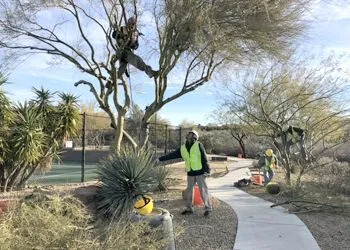
Recognizing the early warning signs of a dying tree can help you take action before it becomes a safety hazard or spreads issues to nearby plants. At AZ Desert Tree Care, we can identify dying trees and safely remove them when necessary. If you notice any of the following symptoms, it’s wise to have the tree evaluated by a professional arborist. Sparse/Thinning Foliage Healthy trees typically produce a full canopy of leaves during the growing season. If you notice sections of your tree with sparse or missing foliage, it may indicate that the tree is under stress or struggling to survive. This is especially concerning if the issue persists through multiple seasons or worsens over time. Thinning leaves often signal problems with nutrient uptake, root health, or disease. Dead Branches Branches that are dry, brittle, and easily snap off are a clear sign of decline. While it’s common for trees to shed a few small branches, an increase in dead limbs—especially in the upper canopy—can indicate serious health issues. Dead branches not only reflect poor tree health, but also pose a safety risk if they fall unexpectedly. Peeling or Damaged Bark The bark of a tree serves as a protective layer, and when it begins to peel or fall away, it can be a serious sign of trouble. Large sections of missing bark or deep splits may expose the inner wood, leaving the tree vulnerable to pests and disease. In some cases, damaged bark can indicate internal decay or structural weakness. Fungal Growth Around the Base The presence of fungi growing near the base of a tree often points to internal rot. Fungi thrive on decaying organic matter, so their appearance can mean that the tree’s root system or trunk is deteriorating. This type of decay can significantly weaken the tree, increasing the likelihood of it falling. Leaning A tree that suddenly begins to lean or shows signs of instability should be taken seriously. While some trees naturally grow at an angle, a noticeable shift in position can indicate root damage or structural failure. Cracked soil around the base or exposed roots may further suggest that the tree is no longer securely anchored. Arborist in Phoenix, AZ When you need an experienced arborist in Phoenix and the surrounding area, contact AZ Desert Tree Care at 602-842-9350 . Feel free to give us a call to ask for an arborist estimate in Phoenix, AZ !
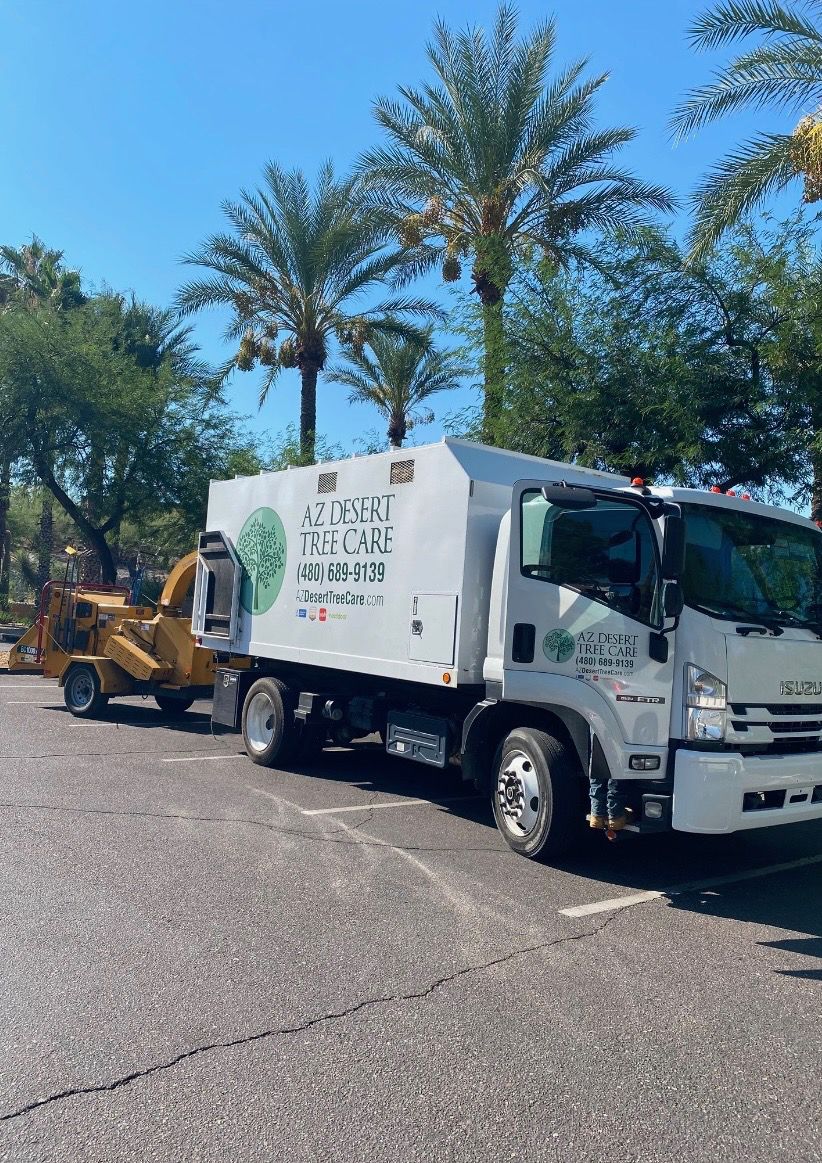
While tree removal is sometimes a last resort, it’s often necessary to protect people and property. Professional arborists are trained to assess tree conditions and determine when removal is the safest and most appropriate option. At AZ Desert Tree Care, we provide expert tree removal in the greater Phoenix area. Here are four common reasons that trees need to be removed by arborists. Severe Disease or Decay One of the most common reasons for tree removal is advanced disease or internal decay. Trees can be affected by fungal infections and other diseases that weaken their structure over time. In many cases, these issues are not fully visible from the outside. As decay progresses, the tree may become unstable and more likely to fail. When a tree’s health cannot be restored, removal is often the safest solution. Proximity to Structures or Utilities Trees that grow too close to homes, buildings, or utility lines can create hazards. Overhanging branches may damage roofs, siding, or windows, while roots can interfere with foundations and underground pipes. Trees near power lines are particularly dangerous, as they can lead to electrical hazards or outages. In these cases, removal may be necessary to protect both property and safety. Dead/Dying Trees A dead or dying tree is no longer structurally sound and can become unpredictable. Without healthy growth, the tree’s wood becomes brittle and more prone to breaking. Dead trees can shed branches or fall entirely, especially during strong winds. Removing a dead tree promptly helps eliminate a potential hazard. Pest Infestations Certain pests can cause significant damage to trees by feeding on wood or disrupting nutrient flow. Severe infestations can weaken a tree’s internal structure and make it more susceptible to disease. In some cases, removing an infested tree is necessary to prevent the spread of pests to nearby healthy trees. Arborists can assess the severity of the infestation and determine whether removal is the best course of action. Tree Removal in Phoenix, AZ When you need an experienced arborist in Phoenix and the surrounding area, contact AZ Desert Tree Care at 602-842-9350 . We provide expertise with both residential and commercial tree services in Phoenix . Feel free to give us a call to arrange an arborist estimate in Phoenix, AZ !